Light Apricot (#fdd5b1) Color Meaning, Codes and Information
A complete guide to Light Apricot (#fdd5b1) covering color values, harmonies, shades, meaning, and practical uses across design, branding, and everyday visuals.
A complete guide to Light Apricot (#fdd5b1) covering color values, harmonies, shades, meaning, and practical uses across design, branding, and everyday visuals.
Light Apricot (#FDD5B1) is defined as a vivid orange. Technical specifications include RGB (253, 213, 177), HSL (28°, 95%, 84%), and CMYK (0%, 16%, 30%, 1%). Flanked by Apricot (#FBCEB1) and Navajo White (#FFDEAD), this shade provides a distinct alternative within its hue family. Compared to Baby Blue Eyes (#A1CAF1), #FDD5B1 appears more saturated, giving it a deeper and more authoritative appearance.
Harmonious matches include Powder Blush (#FDBCB4), Pastel Yellow (#FFFAA0), and Italian Sky Blue (#B2FFFF), creating a balanced aesthetic, while colors like Magic Mint (#AAF0D1), Mauve (#E0B0FF), or Icy Blue (#AFDBF5) may discord with it due to differing tones. Designers often use #FDD5B1 in branding, signage, and high-visibility designs where a specific visual weight is required.
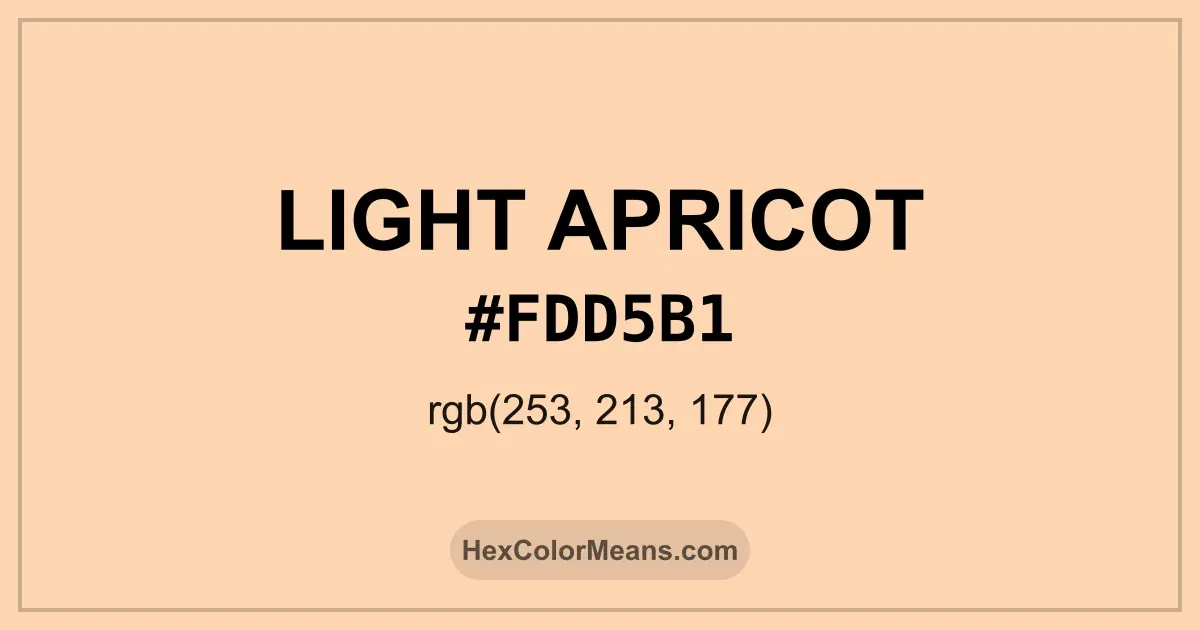
Light Apricot (#FDD5B1) belongs to the pale orange family with peach influence. This shade sits between blush and soft coral. Light Apricot (#FDD5B1) reflects warmth, care, and emotional openness. It feels welcoming and calm. Light Apricot (#FDD5B1) became popular in interior design and skincare branding. The color often appears in wellness and lifestyle spaces. Light Apricot (#FDD5B1) symbolizes tenderness and approachability. It avoids intensity. Light Apricot (#FDD5B1) aligns with heart and sacral spirituality, representing comfort and creativity. The tone supports emotional safety in color psychology. Light Apricot (#FDD5B1) appears in Mediterranean design culture. It represents hospitality and softness.
Accurate conversions of Light Apricot (#fdd5b1) across RGB, Hex, CMYK, HSL, and Lab ensure consistent color fidelity across digital, print, and design applications.
Detailed RGB and CMYK values of Light Apricot (#fdd5b1) displayed in a horizontal bar provide clear reference for digital and print color accuracy.
A full range of Light Apricot (#fdd5b1) variations, including tints, shades, and tones, provides highlights, depth, and subtle desaturated options for UI design.
Harmonious color schemes for Light Apricot (#fdd5b1) created using the color wheel ensure visually balanced palettes.
Colors adjacent on the color wheel (30° apart)
Colors opposite on the color wheel (180° apart)
Three colors using one base hue and the two hues beside its opposite
Three colors evenly spaced (120° apart)
Four colors forming a rectangle on the wheel
Four colors evenly spaced (90° apart)
Four colors formed from two base hues and the colors next to their opposites
Variations of a single hue
Luminance contrast ratios for Light Apricot (#fdd5b1) against standard backgrounds ensure readable, accessible text following Contrast Checker and WCAG 2.1 AA/AAA standards.
Sample Text
This is how your text will look with these colors.
Simulated views of Light Apricot (#fdd5b1) for different color vision deficiencies help identify potential confusion using the Color Blindness Simulator.
Note: These simulations are approximations. Actual color vision deficiency varies by individual.
Sample Text
Sample Text
High-resolution seamless patterns featuring Light Apricot (#fdd5b1) provide ready-to-use backgrounds, wallpapers, and print designs for any project.
A collection of popular icons in Light Apricot (#fdd5b1) offers ready-to-use visuals for interfaces, designs, and creative projects.
Real-world mockups of Light Apricot (#fdd5b1) showcase its versatility across fashion, interiors, branding, and product packaging.
A curated set of tools to help apply, analyze, and manage colors effectively in your projects
Frequently asked questions about Light Apricot (#fdd5b1) color meaning, symbolism, and applications. Click on any question to expand detailed answers.