Tuscan (#fad6a5) Color Meaning, Codes and Information
A complete guide to Tuscan (#fad6a5) covering color values, harmonies, shades, meaning, and practical uses across design, branding, and everyday visuals.
A complete guide to Tuscan (#fad6a5) covering color values, harmonies, shades, meaning, and practical uses across design, branding, and everyday visuals.
Tuscan (#FAD6A5) is a pale orange. Technical specifications include RGB (250, 214, 165), HSL (35°, 89%, 81%), and CMYK (0%, 14%, 34%, 2%). In the color spectrum, it sits between Desert (#FAD5A5) and Pastel Yellow (#FFFAA0), bridging the gap with its distinct tone. Against Light Pastel Purple (#B19CD9), #FAD6A5 leans deeper, marked by its distinct tonal shift.
For complementary designs, combine it with Pastel Red (#FAA0A0), Pastel Yellow (#FFFAA0), and Waterspout (#A4F4F9) to achieve a cohesive look; however, shades such as Magic Mint (#AAF0D1), Light Violet (#CF9FFF), or Baby Blue Eyes (#A1CAF1) tend to create tension with it, creating visual tension. In professional settings, #FAD6A5 is frequently applied in branding, signage, and high-visibility designs.
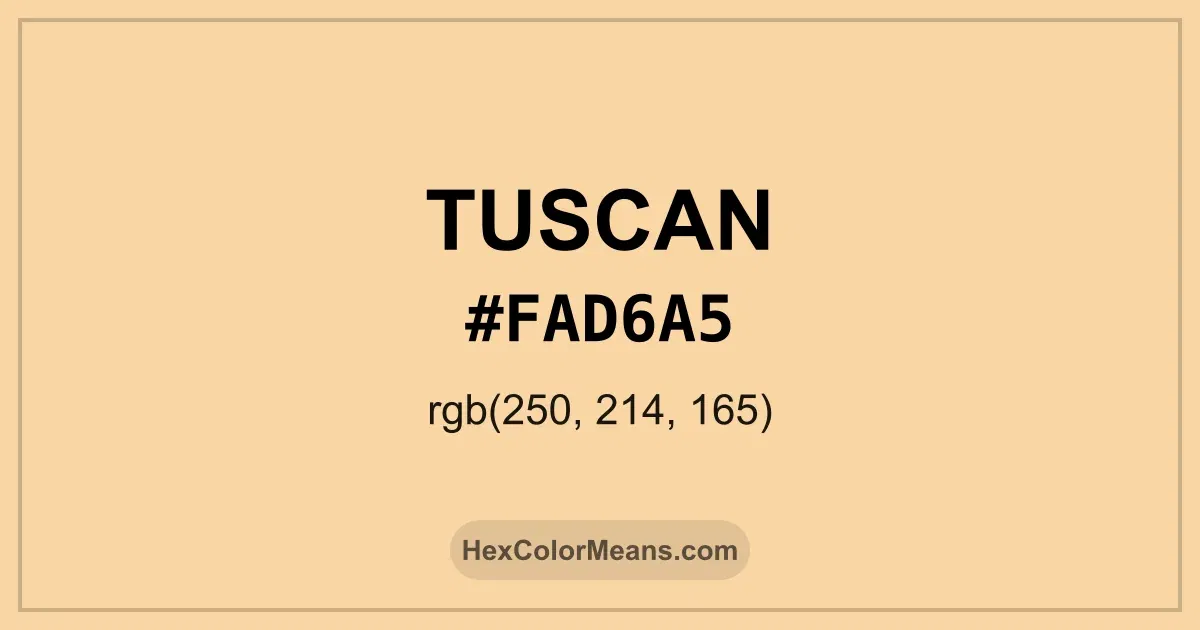
Tuscan (#FAD6A5) is a warm, soft golden-beige, part of the light brown-yellow spectrum. It conveys warmth, comfort, and historic elegance. Tuscan (#FAD6A5) evokes sunlit Mediterranean landscapes, stucco walls, and classical interiors, symbolizing sophistication and inviting energy. Historically, Tuscan tones (#FAD6A5) were prominent in Italian Renaissance interiors, frescoes, and architectural finishes to reflect sunlight and warmth in living spaces. Its gentle warmth enhances mood, creating a sense of harmony and timeless appeal. Tuscan (#FAD6A5) symbolizes elegance, hospitality, and subtle luxury. Tuscan (#FAD6A5) communicates warmth, balance, and visual comfort. Its soft golden hue pairs well with earthy neutrals and muted reds. Tuscan (#FAD6A5) symbolizes timelessness, calm energy, and historic charm, making it ideal for interiors, design, and lifestyle aesthetics.
Accurate conversions of Tuscan (#fad6a5) across RGB, Hex, CMYK, HSL, and Lab ensure consistent color fidelity across digital, print, and design applications.
Detailed RGB and CMYK values of Tuscan (#fad6a5) displayed in a horizontal bar provide clear reference for digital and print color accuracy.
A full range of Tuscan (#fad6a5) variations, including tints, shades, and tones, provides highlights, depth, and subtle desaturated options for UI design.
Harmonious color schemes for Tuscan (#fad6a5) created using the color wheel ensure visually balanced palettes.
Colors adjacent on the color wheel (30° apart)
Colors opposite on the color wheel (180° apart)
Three colors using one base hue and the two hues beside its opposite
Three colors evenly spaced (120° apart)
Four colors forming a rectangle on the wheel
Four colors evenly spaced (90° apart)
Four colors formed from two base hues and the colors next to their opposites
Variations of a single hue
Luminance contrast ratios for Tuscan (#fad6a5) against standard backgrounds ensure readable, accessible text following Contrast Checker and WCAG 2.1 AA/AAA standards.
Sample Text
This is how your text will look with these colors.
Simulated views of Tuscan (#fad6a5) for different color vision deficiencies help identify potential confusion using the Color Blindness Simulator.
Note: These simulations are approximations. Actual color vision deficiency varies by individual.
Sample Text
Sample Text
High-resolution seamless patterns featuring Tuscan (#fad6a5) provide ready-to-use backgrounds, wallpapers, and print designs for any project.
A collection of popular icons in Tuscan (#fad6a5) offers ready-to-use visuals for interfaces, designs, and creative projects.
Real-world mockups of Tuscan (#fad6a5) showcase its versatility across fashion, interiors, branding, and product packaging.
A curated set of tools to help apply, analyze, and manage colors effectively in your projects
Frequently asked questions about Tuscan (#fad6a5) color meaning, symbolism, and applications. Click on any question to expand detailed answers.